
M.T. Rajakesari: A Master of Mridangam
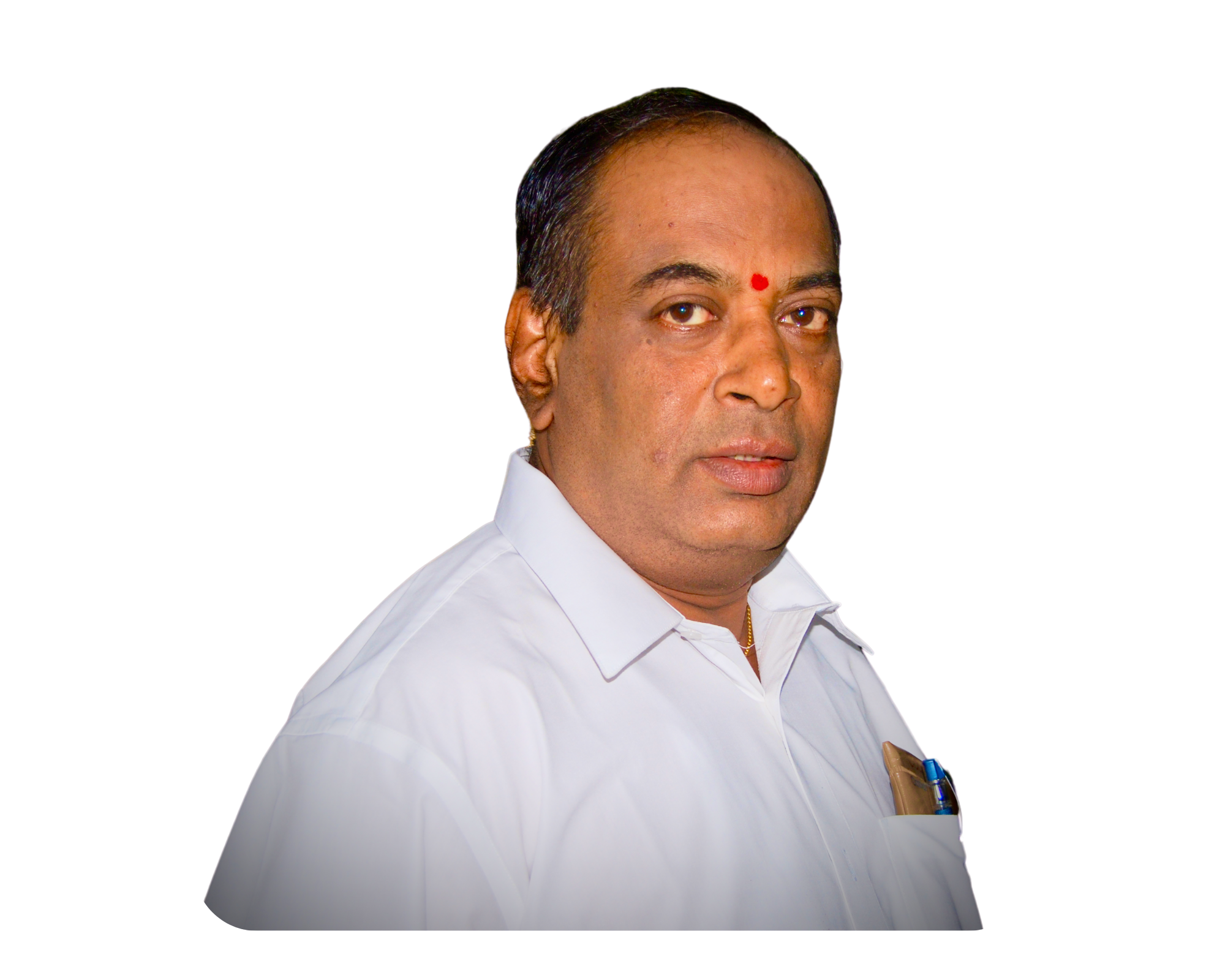
M.T. Rajakesari, a luminary of Mridangam from Karnataka, India, stands as a testament to the enduring legacy of his mentor, the legendary Guru Karaikudi R. Mani. Imbued with a profound understanding of Karnatik music, Rajakesari’s mathematical brilliance and rhythmic virtuosity have captivated audiences worldwide. A dedicated custodian of this classical art form, he has devoted his life to preserving its rich heritage through countless performances across the globe.
A Legacy of Performances and Mentorship
Rajakesari’s contributions to the field of Karnatik music are immeasurable. He has shared the stage with numerous renowned artists, including K.V. Narayanaswamy, Dr. M. Balamuralikrishna, D.K. Jayaraman, Lalgudi Jayaraman, Dr. N Ramani, and more.
He has nurtured emerging talent, contributing significantly to the careers of many contemporary artists like Shashank, Guruprasanna, Udupa, and more.
A Guiding Light to Keerthy Raghavan
Keerthy Raghavan, a brilliant disciple of Rajakesari, embodies the essence of his teachings. With a unique style that fuses tradition and innovation, Keerthy has made significant strides in the world of Karnatik music, bringing a fresh perspective while honoring the legacy of her guru.
Rhythm across Continents & Achievements
Rajakesari’s impact extends far beyond India. His performances at prestigious venues such as the Conservatorium van Amsterdam and his conducting of workshops, and teachings in Pittsburgh, USA have solidified his reputation as a global figure in Karnatik music. His dedication to this art form is further evident in his role as an All India Radio “A” top-grade staff artiste and his administrative responsibilities at the Sruti Laya Kendra, Bangalore chapter, founded by his Guru. Rajakesari’s exceptional contributions have been duly recognized with numerous awards, including the Sangeeta Laya Kala Pratibhamani, Sangeeta Kala Tapasvi, Kala Deepti, Laya Vadya Kala Bhooshana, Palghat Mani Iyer Award, Karnataka Kalashri -highest artist award bestowed by the Government of Karnataka. His legacy as a master of Mridangam continues to inspire and influence generations of musicians, ensuring that this timeless art form thrives for years to come.
Guru's Concerts
Vaibhavam 2016 Taala Vaadya Laya Samvaada
Varnam: Raga Begada
Sri.K.S.Gopalakrishnan
Bangalore K. Ravi Shankar: A Mridangam Mentor
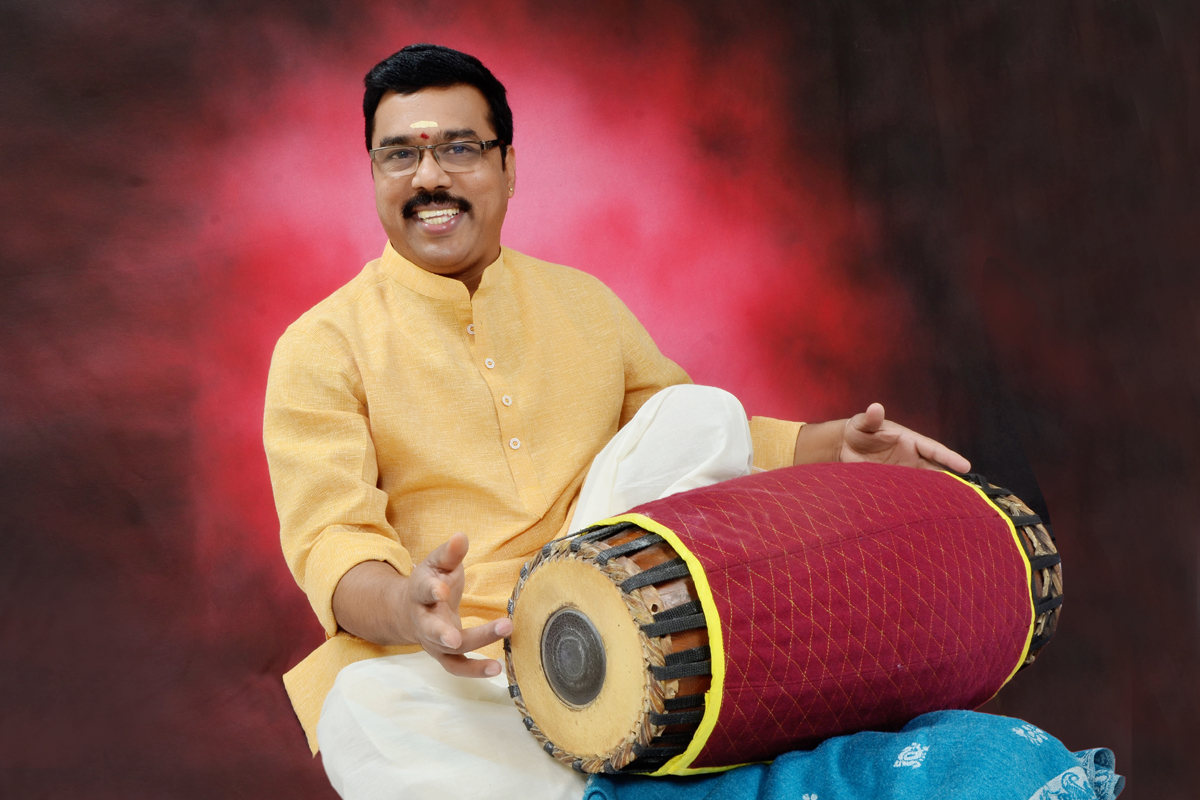
Bangalore K. Ravi Shankar is a renowned Mridangam artist from Karnataka, India. As a disciple of the legendary Guru Karaikudi R. Mani, he received a profound education in the Gurukula tradition, a holistic system emphasizing spiritual, intellectual, and moral development. Trained at the prestigious school Shruti Laya Kendra, founded by his Guru, Ravishankar has excelled as an All India Radio and Doordarshan artist. His performances have graced prestigious venues like Bangalore Gayana Samaja and Madras Music Academy, where he has collaborated with renowned musicians such as Sri.Tanjavoor S. Kalyanaraman, Sri.Kadari Gopalnath, Smt. Sudha Raghunathan, Sri. R.K. Srikantan, Smt.M.S.Sheela, Smt. Ramamani, and many more. Beyond his performing career, Ravishankar has been a dedicated teacher and mentor. He has served as a preceptor at the Sruti Laya Kendra Bangalore Chapter, a visiting tutor at the UK chapter, and a full-time faculty member at the Temple of Fine Arts Malaysia. Under his mentorship, countless mridangam students have blossomed into accomplished musicians, achieving the prestigious milestone of Rangapravesham/Arangetram, where they are qualified to grace the concert stage.His workshops have been conducted at prestigious institutions like the University of Newcastle and international music festivals. Ravishankar has achieved a remarkable degree of mastery over the tonal quality of the Vadayam. His exceptional skills as a mridangam player are abundantly evident in his ability to effortlessly execute the instrument’s intricate rhythms and subtleties. He is dedicated to advancing this traditional art form and the “Karaikudi Mani Bani” by sharing his knowledge and expertise with aspiring musicians. Ravishankar specializes in guiding emerging performers, providing them with invaluable mentorship and technical instruction on “Sadhana”. Ravishankar played a pivotal role in shaping Keerthy Raghavan’s career as a mridangam artist. His invaluable instruction on effective practice techniques undoubtedly contributed to his remarkable achievements. Ravishankar’s mentorship serves as a testament to his dedication to nurturing young talent and preserving the rich traditions of Karnatik music. Currently, he serves as a special faculty member at the Laya Priya School of Music, Vancouver Canada, providing remote support and guidance to the school. His dedication to teaching and his global reach solidify his position as a leading figure in the world of Karnatik music.
Remembering Guru Karaikudi R Mani
A pioneer of Mridangam, Karnatik Percussion - 1945-2023
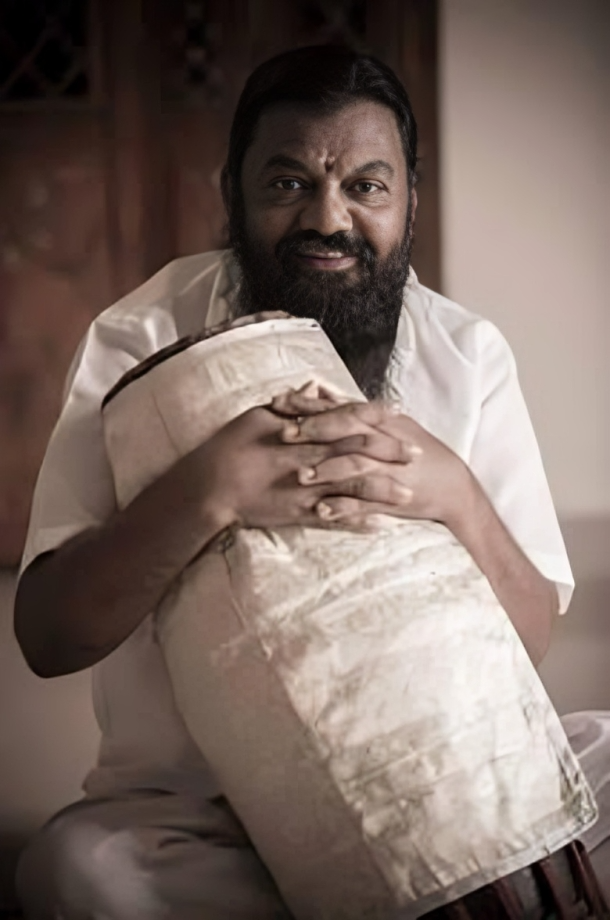
Guru Karaikudi R. Mani, a titan in the realm of Karnatik music, was more than merely a stalwart or a legend; he was a veritable ruler of rhythm, a trendsetter whose innovative approach to the Mridangam inspired millions across the globe. His artistry transcended geographical boundaries, captivating audiences far beyond the shores of India. A visionary who redefined the possibilities of percussion, Mani’s legacy serves as a beacon, guiding countless musicians and elevating the Mridangam to unprecedented heights. Under the spiritual tutelage of Guru Surajananda, a Kundalini Yogi with a lineage of Himalayan masters, Guru Mani embarked on a profound journey of spiritual evolution. Renouncing worldly pursuits in favour of a life dedicated to the RajaVadayam (Kind of Percussion) Mridangam, Guru Mani became more than just a master of the instrument; but a creator of legends and leaving an enduring legacy that continues to inspire many musicians worldwide.
The "Karaikudi Mani Bani” - A style that mesmerised the Masses and created the Class.
Guru Mani’s innovative spirit and groundbreaking approach to the Mridangam left an indelible mark on Karnatik music. He pioneered a distinctive style, characterised by his intricate rhythmic patterns, clarity of thought & strokes and creative exploration of the Mridangam’s tonal variations brought the fame as “Karaikudi Mani Bani” or Karaikudi Mani Style . He was a pioneer in the field of percussion ensembles, revolutionising the landscape of Karnatik music. By showcasing the harmonious interplay of multiple percussion instruments without vocal or melodic accompaniment, he demonstrated the immense expressive potential of this unique ensemble format. His innovative approach to percussion ensembles captivated audiences worldwide, with one event reaching over forty thousand people conducted by Bengal foundation. This achievement solidified his reputation as a visionary and earned him admiration from legends of world music. He not only captivated audiences but also inspired a new generation of Rasikas who came to appreciate the profound beauty and complexity of this art form.
A Revolution in Tani Avartanam (Solo percussion performance)
Guru Karaikudi Mani’s influence on Karnatik music extended far beyond his virtuosic skills on the Mridangam. During the era when Taniyavartanam, or solo percussion performances, were often overlooked and treated as a mere interlude, Guru Mani revolutionised the perception of this art form characterised by their intricate rhythms, precision, and emotional depth, captivated audiences and transformed Taniyavartanam into a highly anticipated and sought-after event. Mani’s artistry elevated the status of the Mridangam, making it a focal point of concerts and attracting a dedicated following of Rasikas, or connoisseurs of Karnatik music. His performances were so mesmerising that audiences would often stay for the entire duration of the Taniyavartanam, a testament to his extraordinary talent. He was a highly sought-after accompanist for vocalists and other musicians, and his presence alone could elevate the quality of concert. Aspiring Mridangam artists looked up to him as a role model, and striving to emulate his mastery and innovation.
Fans spoke of him in the same breath as legends such as Palghat Mani Iyer and Palani Subramaniam Pillai whom Mani revered. At Kutchers people in the audience often walkout of the hall for a short break when the Taniyavartanam Start. Mani Ensured that no one moved, except to the edge of the seat. – Times of India
Global Influence
Guru Mani’s debut album, “Sruthi Laya,” was a resounding success, selling millions of copies both domestically and internationally. This album ignited a global percussion wave, propelling Mani to international acclaim and leading to numerous performances and workshops around the world. Sruthi Laya ensemble has captivated audiences worldwide. This innovative group features top- ranking Indian percussionists, with the Mridangam taking center stage. Sruthi Laya has collaborated with renowned international ensembles, such as the Australian Art Orchestra, led by Paul Grobowsky, and Nada, led by Eerohameenniemi from Finland. These collaborations have showcased the versatility and expressive power of Karnatik percussion on a global stage.
Shruti Laya Kendra - Nurturing the Legacy of Karnatik Music & Percussion
Guru Karaikudi Mani’s enduring legacy is exemplified by the establishment of the Sruti Laya Kendra, a premier institution dedicated exclusively to the cause of music, musicians, and students. As the first institution of its kind to be led by a percussionist, Sruti Laya Kendra has played a pivotal role in nurturing and promoting Karnatik music. Through its comprehensive programs, the institution has educated thousands of students in the art of the Mridangam, ensuring that this rich musical tradition continues to thrive for generations to come. Expanding their reach beyond India, Sruthi Laya Kendra have established chapters in cities across India (Chennai, Bangalore , Chalakudi, Hyderabad) as well as in Australia, the United Kingdom, Germany and United States of America. This global network serves as a testament to Guru Mani’s vision and the enduring impact of his legacy on Karnatik music.
The Rhythm of life: Mani Sir's influence on Keerthy Raghavan.
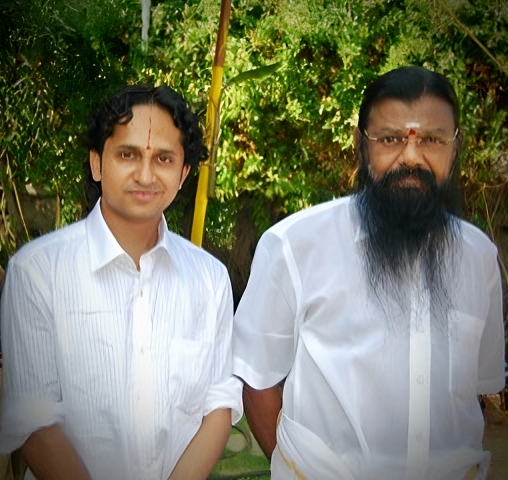
Guru Mani has not merely imparted technical expertise to Keerthy Raghavan but has also served as a guiding star illuminating his life’s journey. His profound insights into the nuances of existence, both within and beyond the musical realm, have sculpted Keerthy into a person of depth and character.
A Fitting Tribute: Karaikudi R. Mani Honoured in India's New Parliament
As a testament to his enduring legacy, the Government of India has requested the Shruti Laya Kendra, Chennai, to donate one of Guru Karaikudi R. Mani’s cherished instruments for display in the nation’s new Parliament building. This gesture serves as a fitting tribute to the maestro, whose contributions to Karnatik music have left an indelible mark on India’s cultural heritage.
Today, the showcase panel number 4 in the Sangeet Deergha section of the new Parliament building proudly features Karaikudi R. Mani’s instrument, a tangible reminder of his extraordinary artistry and the enduring impact he has had on the world of music. – Link
Guru's Concerts
Vaibhavam 2016 Taala Vaadya Laya Samvaada
Varnam: Raga Begada
Sri.K.S.Gopalakrishnan
What Mainstream Media Say About Him
A loving memory of Vidushi Jahnavi Jayaprakash (1950 -2002)
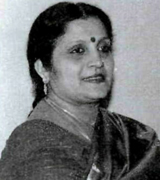
The magic of her magnificent voice, her sense of proportion and the emotional content of her singing are just some of the qualities that made Jahnavi Jayaprakash the foremost and most popular vocalist of Karnataka of recent decades. In Amsterdam, she had a profound and lasting influence on a whole generation of musicians. She was endowed with a rich and melodious voice, encompassing three octaves with ease, which had precision, tone perfection and clarity. The much-travelled Jahnavi was born in 1950 into an illustrious family of poets, composers and musicologists enjoying a cherished place in the literary and music world of Karnataka. She is the paternal aunt of Keerthy Raghavan, who ignited a passion for Carnatic music, leading him to seek the tutelage of the renowned Mridangam artist, M.T. Rajekesari, an All-India Radio A Top-list performer. Jahnavi’s training in classical Karnatik music began at an early age, having had the good fortune of learning from such stalwarts in the field as Sri. T. Puttaswamaiah of Bangalore and Sri. H.V. Venkateshaiah of Holenarasipur, who groomed her in the various aspects of this multifaceted and arduous art form. Besides being well versed in the practical side of Indian classical music, she also had a deep theoretical background in the subject, having taken a master’s degree in music at Bangalore University in 1977.
A performing artiste of extraordinary caliber, Jahnavi gave innumerable vocal recitals at important cultural centers all over India and abroad, particularly in the USA, Europe, Canada, Middle and the Far East. She participated in many International and multicultural festivals of Music and Dance in both the USA and Europe. In 1990, she participated in the festival of India celebrations held in Los Angles and San Francisco, as well as the prestigious Los Angeles Festival of Music and Dance. Jahnavi’s forte lay in her capacity to sing for classical Indian dancing. This unique talent endeared her to the entire dancing fraternity. She accompanied almost all the leading Indian classical dancers, the world over and she co-produced major dance performances in USA at the Japan America Theater, Long Beach Convention Center, Dorothy Chandler Pavilion etc. In the year 1990, she provided music for “The Mahabharata”, a dance drama created by Peter Brook performed at the Los Angeles festival of music and dance. Jahnavi’s artistic proficiency won her many bequests and accolades: she received the state award for her first place in the art faculty of the Bangalore University in the year 1977. In recognition and appreciation of her talent she was also conferred with the titles “Swarna Kokila” and “Sangeetha Sharade”, and in 1997 she was awarded the title “Karnataka Kalashree”.
During a European tour in 1993, she came into contact with Rafael Reina (http:// www.rafaelreina.org/rafael-reina.html), a composer and senior teacher at the Amsterdam Conservatory. He studied with her for several years and subsequently created a curriculum at the Conservatory of Amsterdam called “Applications of Karnatik Rhythm to Contemporary Music” ( https://rb.gy/ttusak ). This milestone opened doors for many Karnatik musicians to gain access to the European market, such as B.C. Manjunath, Varijashree Venugopal, Mysore Manjunath, and many more.
In 1998 Jahnavi was invited to conduct a weeklong seminar and workshop on the “Science and Art of Karnatik Music”, which was organized jointly by the Conservatory and the International Society for Microtonal Music (Huygens-Fokker Foundation). As part of this event, a series of concerts were arranged for Jahnavi throughout the Netherlands in collaboration with several prestigious Dutch organizations. Her musicality and teachings were so captivating that she returned to the Netherlands in 2000, 2001 and 2002 for more workshops and concerts and she taught many musicians who began regularly experimenting with what they had learned at the Karnatik Lab. Always striving for innovation, Jahnavi also participated in several musical collaborations, including a crossover project organized by the Kulsan Foundation with Turkish musicians. “A visionary philanthropist, she established the Vidya Sundari Bengaluru Nagaratnamma Trust to honor the often-overlooked legend of Nagaratnamma. Nagaratnamma, a patron of the arts, constructed the magnificent Shri Thyagaraja Swamy Temple in Thiruvarur, a pilgrimage site for musicians worldwide. Every year, thousands of artists gather on the banks of the Kaveri River to celebrate the birth of Thyagaraja, one of Karnatik music’s greatest composers.
In her unwavering dedication to preserving cultural heritage, she co-founded the Raja Rajeshwari Nagar cultural organization. This institution serves as a beacon for the arts, fostering a vibrant community where music, dance, folklores, and traditions flourish. The annual Sri Ramotsava, Navaratri festivals, and monthly concerts continue to draw thousands of devotees and enthusiasts, ensuring that the rich tapestry of Indian culture remains alive.” While she already had had a profound effect, the feeling in Amsterdam in 2002 was that her teachings were just beginning when she died suddenly in April of a heart attack at the age of 52. Her students, fans and colleagues throughout India, North America and Europe were shocked. The loss suffered that day made no sense because she was a great artist in her prime; one whose influence was just starting to rapidly effect new circles of people.